Using Thin Thread Mesh Discharge Ink:
Discharge Prints are more vibrant and have greater details using the proper thin thread mesh. S-thread mesh allows the ink to pass with ease through a greater open area than is achievable with T thread mesh. Typically to get good discharge color the print must soak the shirt 50% of the way through the fabric so that during curing the surface fabric and underlying weave is completely discharged to a greige goods color. Generally the greige goods color is a tan color. Different colors of fabric have different discharge ratings, 5 being best and 1 being marginal. A black shirt is typically a “5” while a turquoise shirt made with dischargeable reactive dyes does not discharge as well and is rated at 1-2 on discharge effectiveness.
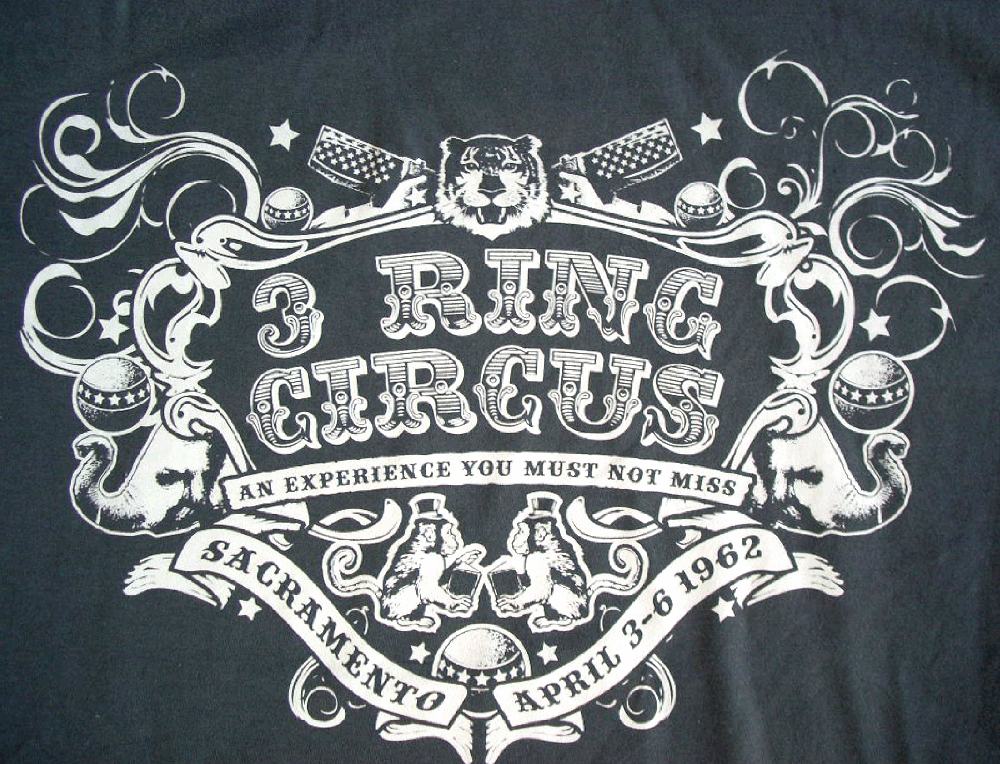
The example shown above was printed at Motion Graphics in Sacramento California. Tom has a great article coming out in the June issue of Printwear magazine that deserves reading.
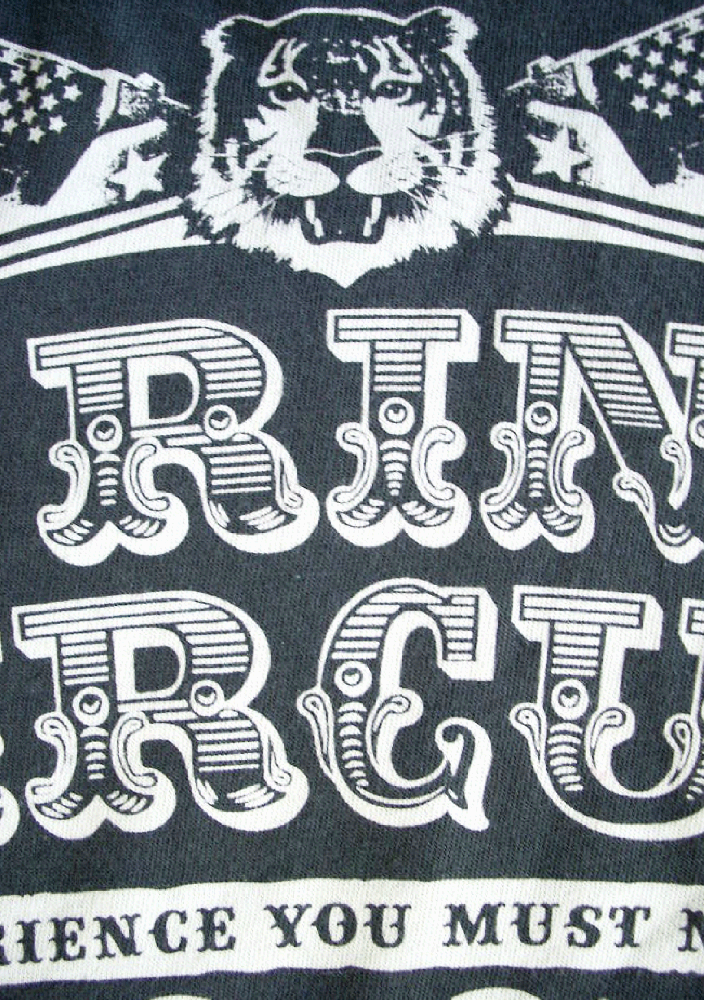
Look at the detail above in this discharge print. S thread allowed lots of discharge ink to pass through the mesh, in this case a 150 thread per inch with a 48 micron thread. In the past this would be classified as an S thread. Today with the variety of thread sizes available we refer to it as a 150/48. When S Thread is combined with Aquasol HV or HVP the screen has the best combination for printing discharge. S-thread helps the ink print well, and Aquasol HV or HVP can stand up to the longest print runs you can produce.  However there are many different fabric weights and weaves that require specific mesh counts to achieve brilliant detailed discharge. Typically shirts have different fabric weights from very light 4.3 oz. up to 6.1 oz. ‘Beefy T’ weights as well as different thicknesses of yarn and singles count. The chart to the left are fabric weights and the highest mesh count suggestion that can be used. Press set up can have many more adjustments to yield a good print. Squeegee angle, durometer and speed also play an important part of a good print. S thread can eliminate some of these adjustments so that press settings of the squeegees do not need minimal modification.
 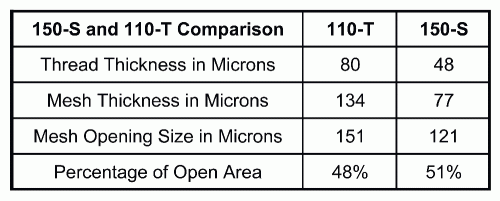 To obtain the detail of the example shown you need S-Thread. The increased open area allows the ink to soak the shirt while the higher mesh counts improves the detail the screen is capable of printing. The mesh statistics in the chart below shows why. 150-48 has an open area of 51% but has 40 more threads per inch than a 110-T mesh which only has a 43% open area. So more threads and more open area all create a sharper discharge print with excellent color. Click here to continue reading the article: Using S Thread Mesh
For more information and specifications on using Murakami Screen Mesh in production please contact our Technical Support Representatives available Monday through Friday 8am to 5pm PST at: (323) 980-0662